Urinary Stones 101
The following information is adapted from the The National Institute of Diabetes and Digestive and Kidney Diseases (NIDDK). Click on the plus sign (+) to view the answers.
Definitions and Facts
Urinary stones are hard, pebble-like pieces of material that form in one or both of your kidneys when high levels of certain minerals are in your urine. Urinary stones rarely cause permanent damage if treated by a healthcare professional.
Urinary stones vary in size and shape. They may be as small as a grain of sand or as large as a pea. Rarely, some urinary stones are as big as golf balls. Urinary stones may be smooth or jagged and are usually yellow or brown.
A small urinary stone may pass through your urinary tract on its own, causing little or no pain. A larger stone may get stuck along the way. A stone that gets stuck can block your flow of urine, causing severe pain or bleeding.
Urinary stone disease is a disorder of mineral metabolism. The risk of having a urinary stone is determined by the interaction of genetics, diet, environmental exposures, other medical conditions, and medications.
Urinary stones are caused by high levels of calcium, oxalate, and phosphorus in the urine. These minerals are normally found in urine and do not cause problems at low levels.
Certain foods may increase the chances of having a urinary stone in people who are more likely to develop them.
- sharp pains in your back, side, lower abdomen, or groin
- pink, red, or brown blood in your urine (hematuria)
- a constant need to urinate
- pain while urinating
- inability to urinate or can only urinate a small amount
- cloudy or bad-smelling urine
See a healthcare professional right away if you have any of these symptoms. These symptoms may mean you have a urinary stone or a more serious condition.
Your pain may last for a short or long time, or it may come and go in waves. Along with pain, you may have
- nausea
- vomiting
Other symptoms include
- fever
- chills
The scientific name for a urinary stone is renal calculus or nephrolith. You may hear healthcare professionals call this condition nephrolithiasis or urolithiasis.
There are four main types of urinary stones:
Calcium stones
Calcium stones, including calcium oxalate stones and calcium phosphate stones, are the most common types of urinary stones. Calcium oxalate stones are more common than calcium phosphate stones.
Calcium from food does not increase your chance of having calcium oxalate stones. Normally, extra calcium that isn’t used by your bones and muscles goes to your kidneys and is flushed out with urine. When this doesn’t happen, the calcium stays in the kidneys and joins with other waste products to form a urinary stone.
Uric acid stones
A uric acid stone may form when your urine contains too much acid. Eating a lot of fish, shellfish, and meat—especially organ meat—may increase uric acid in urine.
Struvite stones
Struvite stones may form after you have a urinary tract infection. They can develop suddenly and become large quickly.
Cystine stones
Cystine stones result from a disorder called cystinuria that is passed down through families. Cystinuria causes the amino acid cystine to leak through your kidneys and into the urine.
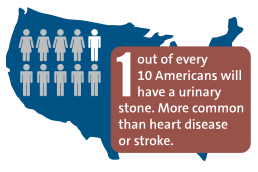
Urinary stones are common and are on the rise. About 11 percent of men and 6 percent of women in the United States have urinary stones at least once during their lifetime.
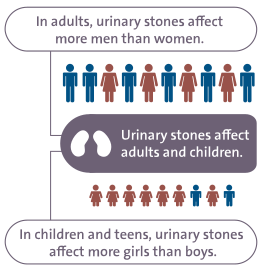
In adults, men are more likely to develop urinary stones than women. Among children and teens, urinary stones are more common in girls than boys.
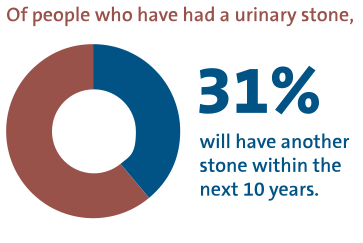
If you have a family history of urinary stones, you are more likely to develop them. You are also more likely to develop urinary stones again if you’ve had them once.
You may also be more likely to develop a urinary stone if you don’t drink enough liquids.
You are more likely to develop urinary stones if you have certain conditions, including
- a blockage of the urinary tract
- chronic, or long-lasting, inflammation of the bowel
- cystic kidney diseases, which are disorders that cause fluid-filled sacs to form on the kidneys
- cystinuria, a genetic disorder that affects the kidneys and leads to the formation of stones in the urinary tract
- digestive problems or a history of gastrointestinal tract surgery
- gout, a disorder that causes painful swelling of the joints
- hypercalciuria, a condition that runs in families in which urine contains unusually large amounts of calcium; this is the most common condition found in people who form calcium stones
- hyperoxaluria, a condition in which urine contains unusually large amounts of oxalate
- hyperparathyroidism, a condition in which the parathyroid glands release too much parathyroid hormone, causing extra calcium in the blood
- hyperuricosuria, a disorder in which too much uric acid is in the urine
- obesity
- repeated, or recurrent, UTIs
- renal tubular acidosis, a disease that occurs when the kidneys fail to remove acids into the urine, which causes a person’s blood to remain too acidic
You are more likely to develop urinary stones if you are taking one or more of the following medicines over a long period of time:
- diuretics, often called water pills, which help rid your body of water
- calcium-based antacids
- indinavir, a protease inhibitor used to treat HIV infection
- topiramate, an anti-seizure medication
Diagnosing Urinary Stones
Healthcare professionals use your medical history, a physical exam, and lab and imaging tests to diagnose urinary stones.
A healthcare professional will ask if you have a history of health conditions that make you more likely to develop urinary stones. The healthcare professional may ask if you have a family history of urinary stones and about what you typically eat.
Urine tests can show whether your urine contains high levels of minerals that form urinary stones. Urine and blood tests can also help a healthcare professional find out what type of urinary stones you have.
Urinalysis. Urinalysis involves a healthcare professional testing your urine sample. You will collect a urine sample at a doctor’s office or at a lab, and a healthcare professional will test the sample. Urinalysis can show whether your urine has blood in it and minerals that can form urinary stones. White blood cells and bacteria in the urine mean you may have a urinary tract infection.
Blood tests. A healthcare professional may take a blood sample from you and send the sample to a lab to test. The blood test can show if you have high levels of certain minerals in your blood that can lead to urinary stones.
Healthcare professionals use imaging tests to find urinary stones. The tests may also show problems that caused a urinary stone to form, such as a blockage in the urinary tract or a birth defect. You do not need anesthesia for these imaging tests.
Abdominal x-ray. An abdominal x-ray is a picture of the abdomen that uses low levels of radiation and is recorded on film or on a computer. An x-ray technician takes an abdominal x-ray at a hospital or outpatient center, and a radiologist reads the images. During an abdominal x-ray, you will lie on a table or stand up. The x-ray technician will position the x-ray machine over or in front of your abdomen and ask you to hold your breath so the picture won’t be blurry. The x-ray technician then may ask you to change position for additional pictures. Abdominal x-rays can show the location of urinary stones in the urinary tract. Not all stones are visible on abdominal x-ray.
Computed tomography (CT) scans. CT scans use a combination of x-rays and computer technology to create images of your urinary tract. Although a CT scan without contrast medium is most commonly used to view your urinary tract, a healthcare professional may give you an injection of contrast medium. Contrast medium is a dye or other substance that makes structures inside your body easier to see during imaging tests. You’ll lie on a table that slides into a tunnel-shaped device that takes the x-rays. CT scans can show the size and location of a urinary stone, if the stone is blocking the urinary tract, and conditions that may have caused the urinary stone to form.
Ultrasound. Ultrasound is the preferred imaging test for children and adolescents. In abdominal ultrasound, the healthcare provider applies a gel to the person’s abdomen and moves a hand-held transducer over the skin. The gel allows the transducer to glide easily, and it improves the transmission of the signals.
The procedure is performed in a healthcare provider’s office, outpatient center, or hospital by a specially trained technician, and the images are interpreted by a radiologist; anesthesia is not needed. An abdominal ultrasound can create images of the entire urinary tract. The images can show damage or abnormalities in the urinary tract. Not all urinary stones are visible with ultrasound.
Treating Urinary Stones
Healthcare professionals usually treat urinary stones based on their size, location, and what type they are.
Healthcare professionals usually treat urinary stones based on their size, location, and what type they are.
Small stones may pass through your urinary tract without treatment. If you’re able to pass a stone, a healthcare professional may ask you to catch the stone in a special container and may send the stone to a lab to find out what type it is. A healthcare professional may advise you to drink plenty of liquids if you are able to help move a stone along. The healthcare professional also may prescribe pain medicine.
Larger stones or stones that block your urinary tract or cause great pain may need urgent treatment. If you are vomiting and dehydrated, you may need to go to the hospital and get fluids through an IV.
A urologist can remove the urinary stone or break it into small pieces with the following treatments:
Shock wave lithotripsy. The doctor can use shock wave lithotripsy to blast the urinary stone into small pieces. The smaller pieces of the stone then pass through your urinary tract. A doctor can give you anesthesia during this outpatient procedure.
Cystoscopy and ureteroscopy. During cystoscopy, the doctor uses a cystoscope to look inside the urethra and bladder to find a stone in your urethra or bladder. During ureteroscopy, the doctor uses a ureteroscope, which is longer and thinner than a cystoscope, to see detailed images of the lining of the ureters and kidneys. The doctor inserts the cystoscope or ureteroscope through the urethra to see the rest of the urinary tract. Once the stone is found, the doctor can remove it or break it into smaller pieces. The doctor performs these procedures in the hospital with anesthesia. You can typically go home the same day.
Percutaneous nephrolithotomy. May be used for large or complex stones. The doctor uses a thin viewing tool, called a nephroscope, to locate and remove the stone. The doctor inserts the tool directly into your kidney through a small cut made in your back. For larger stones, the doctor also may use a laser to break the stones into smaller pieces. The doctor performs percutaneous nephrolithotomy in a hospital with anesthesia. You may have to stay in the hospital for several days after the procedure.
Stents. After these procedures, sometimes the urologist may leave a thin flexible tube, called a ureteral stent, in your urinary tract to help urine flow or a stone to pass. Once the stone is removed, your doctor sends the stone or its pieces to a lab to find out what type it is.
The healthcare professional also may ask you to collect your urine for 24 hours after the urinary stone has passed or been removed. The healthcare professional can then measure how much urine you produce in a day, along with mineral levels in your urine. You are more likely to form stones if you don’t make enough urine each day or have a problem with high mineral levels.
Preventing Urinary Stones
To help prevent future urinary stones, you need to know what caused your previous stones. Once you know what type of stone you had, a healthcare professional can help you make changes to your eating, diet, and nutrition to prevent future urinary stones.
In most cases, drinking enough liquids each day is the best way to help prevent most types of urinary stones. Drinking enough liquids keeps your urine diluted and helps flush away minerals that might form stones.
Though water is best, other liquids such as citrus drinks may also help prevent urinary stones. Some studies show that citrus drinks, such as lemonade and orange juice, protect against stones because they contain citrate, which stops crystals from turning into stones.
Unless you have kidney failure, you should drink eight to ten, 8-ounce glasses a day. If you previously had cystine stones, you may need to drink even more. Talk with a healthcare professional if you can’t drink the recommended amount due to other health problems, such as urinary incontinence, urinary frequency, or kidney failure.
The amount of liquid you need to drink depends on the weather and your activity level. If you live, work, or exercise in hot weather, you may need more liquid to replace the fluid you lose through sweat. A healthcare professional may ask you to collect your urine for 24 hours to determine the amount of urine you produce a day. If the amount of urine is too low, the healthcare professional may advise you to increase your liquid intake.
If you have had a urinary stone, a healthcare professional also may prescribe medicines to prevent future urinary stones. Depending on the type of stone you had and what type of medicine the healthcare professional prescribes, you may have to take the medicine for a few weeks, several months, or longer.
For example, if you had struvite stones, you may have to take an oral antibiotic for 1 to 6 weeks, or possibly longer.
If you had another type of stone, you may have to take a potassium citrate tablet 1 to 3 times daily. You may have to take potassium citrate for months or even longer until a healthcare professional says you are no longer at risk for urinary stones.
| Type of urinary stone | Possible medicines prescribed by your doctor |
|---|---|
| Calcium Stones |
|
| Uric Acid Stones |
|
| Struvite Stones |
|
| Cystine Stones |
|
Talk with a healthcare professional about your health history prior to taking urinary stone medicines. Some urinary stone medicines have minor to serious side effects. Side effects are more likely to occur the longer you take the medicine and the higher the dose. Tell the healthcare professional about any side effects that occur when you take urinary stone medicine.
People with hyperparathyroidism, a condition that results in too much calcium in the blood, sometimes develop calcium stones. Treatment for hyperparathyroidism may include surgery to remove the abnormal parathyroid gland. Removing the parathyroid gland cures hyperparathyroidism and can prevent urinary stones. Surgery sometimes causes complications, including infection.
You may be able to prevent future urinary stones by making changes in how much sodium, animal protein, calcium, or oxalate you consume. A dietitian who specializes in urinary stone prevention can help you plan meals.
You can make changes to what you eat based on the type of urinary stone you had:
| Type of urinary stone | Helpful change in diet and nutrition |
|---|---|
| Calcium Oxalate Stones |
|
| Calcium Phosphate Stones |
|
| Uric Acid Stones |
|
Reduce sodium
Talk with a healthcare professional about how much sodium should be in what you eat, especially if you had calcium oxalate stones or calcium phosphate stones.
Most people in the United States consume too much sodium. Sodium is a part of salt. Sodium is in many canned, packaged, and fast foods. Sodium is also in many condiments, seasonings, and meats. Your chance of developing urinary stones increases when you eat more sodium.
Dietary Guidelines for Americans (2020-2025) provides information on how much sodium an adult should have each day. If you have had calcium oxalate or calcium phosphate stones, you should follow this guideline even if you take medicine to prevent urinary stones.
Here are some tips to help reduce your sodium intake:
- Check the Percent Daily Value (%DV) for sodium on Nutrition Facts label, found on many foods. Low in sodium is 5% or less and high in sodium is 20% or more.
- Consider writing down how much sodium you consume each day.
- When eating out, ask about the sodium content in the food.
- Avoid processed and fast foods, canned soups and vegetables, and lunch meats.
Check labels for ingredients and hidden sodium, such as
- sodium bicarbonate, the chemical name for baking soda
- baking powder, which contains sodium bicarbonate and other chemicals
- disodium phosphate
- monosodium glutamate, or MSG
- sodium alginate
- sodium nitrate or nitrite
To reduce sodium to help prevent urinary stones, avoid processed and fast foods, canned soups and vegetables, and lunch meats.
Limit animal protein
Eating animal protein may increase your chances of developing urinary stones.
A healthcare professional may tell you to limit eating animal protein, including
- beef, chicken, and pork, especially organ meat
- eggs
- fish and shellfish
- milk, cheese, and other dairy products
Although you may need to reduce how much animal protein you have each day, you still need to make sure you get enough. Talk with the healthcare professional about how much animal protein you should eat.
Consider replacing some of the meat and animal protein you would typically eat with some of these plant-based foods that are high in protein:
- beans, peas, and lentils
- soy foods, such as soy milk and tofu
- nuts and nut spreads, such as almond butter, peanut butter, and soy nut butter
- sunflower seeds
Reduce oxalate
You may want to avoid these foods to help reduce the amount of oxalate in your urine:
- nuts
- rhubarb
- spinach
- wheat bran
Talk with a healthcare professional about how much oxalate should be in what you eat, especially if you had calcium oxalate stones.
Get enough calcium
Talk with a healthcare professional about how much calcium you should eat, especially if you had calcium stones. Even though calcium sounds like it would be the cause of calcium stones, it’s not. Calcium from food does not increase your risk of calcium oxalate stones. In fact, if you had calcium oxalate stones, the healthcare professional may tell you to have calcium every day to help prevent urinary stones and support strong bones.
Foods that are high in calcium include dairy products, such as low-fat milk and yogurt, and lactose-free milk with calcium.
Plan meals to lose weight
Studies have shown that being overweight increases your risk of urinary stones, particularly uric acid stones. A dietitian can also help you plan meals to help lose weight. Studies show that eating healthy foods that are low in carbohydrates can further increase your risk of uric acid stones and should be avoided.
Studies have shown that the Dietary Approaches to Stop Hypertension (DASH) diet can reduce the risk of urinary stones. The DASH diet is high in fruits and vegetables, moderate in low-fat dairy products, and low in animal protein. Learn more about the DASH diet.
Can drinking water help prevent or relieve urinary stones?
Drinking enough liquid is the most important thing you can do to prevent urinary stones. Unless you have kidney failure, healthcare professionals recommend that you drink six to eight, 8-ounce glasses a day. People with cystine stones may need to drink even more. Talk with a healthcare professional about how much liquid you should drink.